

The Association
The NTFN eV advocates for people who have fled their homes and are suffering from the consequences of torture, persecution, war, or displacement. Its goal is to improve healthcare for traumatized and/or mentally ill refugees in Lower Saxony.
Our patron is Dr. Andreas Philippi, Minister of Social Affairs of the State of Lower Saxony.
Aims and statutes
The NTFN eV is committed to supporting migrants who have suffered traumatic experiences through torture, persecution, war or flight and who suffer physical and/or psychological consequences in the short or long term, and whose ability to cope, work and live is therefore limited, as well as their family members, especially children and young people (§ 2 of the statutes).
Therefore, the NTFN advocates for:
- Professional care for traumatized refugees regardless of their residency status
- High professional standards for expert reports on traumatization
- Improving refugees' access to psychotherapeutic help
- Networking of medical, psychological, social therapeutic and legal expertise to support traumatized refugees
- Right of residence for traumatized individuals who could be retraumatized upon return or cannot expect appropriate treatment.
- Consideration of the special situation of traumatized refugees in law and administration
Please also read our full statutes.

Become a member!
The entire range of services offered by NTFN e.V. is only possible thanks to its members. Without members, there is no association; without an association, there are no psychosocial centers and no human rights work for refugees. We would therefore be delighted if you would like to support this work through your membership. The association is recognized as a non-profit organization and is therefore authorized to issue donation receipts. You can find out how to become a member here.

Board of Directors
Would you like to volunteer, organize a fundraising event, or provide support in some other way?
Then write an email to the club's board of directors at verein[at]ntfn.de

Susanne Schröder
chairman
Phone: 0511-6006030
Email: schroeder[at]lsfw.de
- Lawyer specializing in asylum law since 1995
- Specialist lawyer for migration law since 2017
- Legal advisor to the association "Der Paritätische Niedersachsen" and member of the legal advisors' conference
- Founding member of NTFN eV, on the board ever since.

Nicolai Zipfel
Chairman
Phone: 0511-30760716
Email: mail[at]nicolai-zipfel.de
- 2006-2012 County Councillor in Göttingen, since then active in refugee counselling
- Lawyer specializing in asylum law since 2012
- Specialist lawyer for immigration law since 2017
- Member of Amnesty International's Police and Human Rights working group.
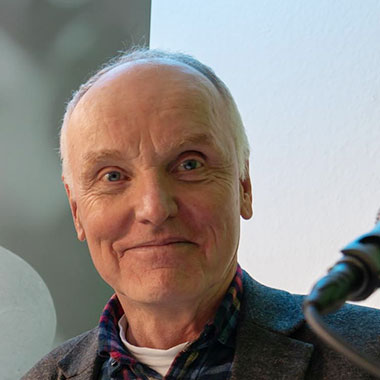
Henning Röhrs
Treasurer
- Child and adolescent psychotherapist
- Since 2008, working with traumatized underage refugees in cooperation with the NTFN
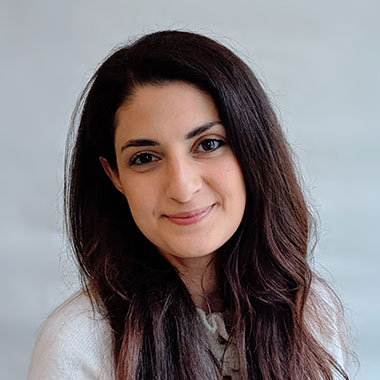
Dalia Ajnass-Klossek
Assessors
- Aspiring business lawyer.
- Former employee of NTFN eV as assistant to the management with a focus on personnel and data protection for all NTFN locations (from 2018-2021).
- Organizational member of the Refugee Law Clinic (RLC) Hannover since 2015.
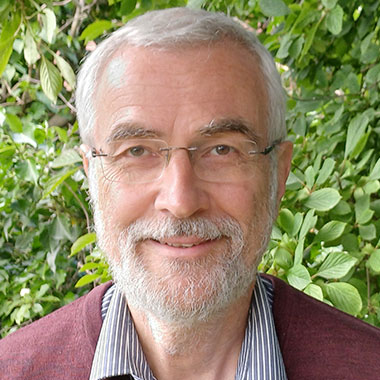
Martin Roger
Assessor
- Environmental engineer at Deutsche Bahn
- many years of refugee counselling and representation of Amnesty's asylum concerns in Lower Saxony
- 2013-2017 on the German Amnesty board
- Founding member of the NTFN
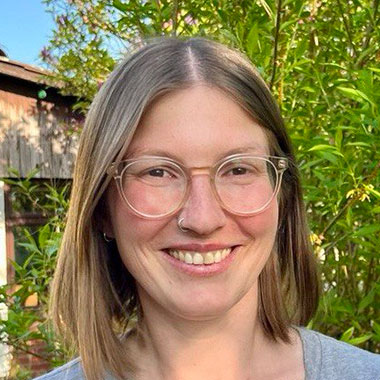
Nassim Wendt
assessor
- Psychologist and psychotherapist in training with a systemic orientation.
- Former employee of NTFN eV
Advisory Board
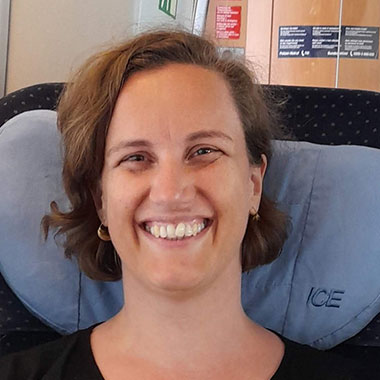
Frauke Baller
Frauke Baller is a psychological psychotherapist (CBT), speaker for “Psychotherapy in Threes” and moderator of the quality circle “Trauma and Flight”.
“I support NTFN eV because it advocates for early and adequate treatment options for mentally ill refugees.”
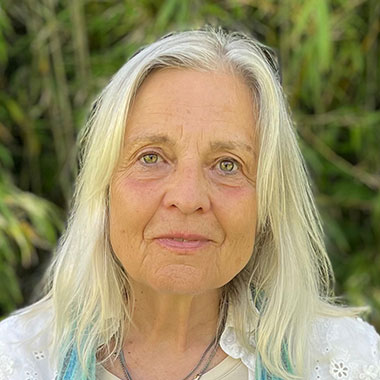
Gertrud Corman-Bergau
Gertrud Corman-Bergau is a psychological psychotherapist and psychoanalyst (DPG, IPA, DGPT).
“I support NTFN eV because professional and appropriate treatment of people suffering from mental illness in the context of flight, displacement, and war is essential. This creates the conditions for understanding, integration, and helps in rebuilding destroyed structures.”
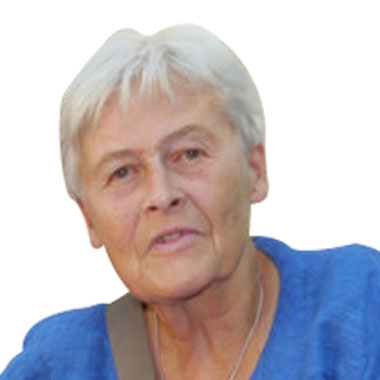
Sigrid Ebritsch
Sigrid Ebritsch is a qualified educator and formerly worked at the Diaconal Service of the Evangelical Lutheran State Church of Hanover.
“I support NTFN eV because the psychological problems of refugees arriving and living here are constantly increasing, and NTFN eV is an important component in the counselling and support of these refugees.”
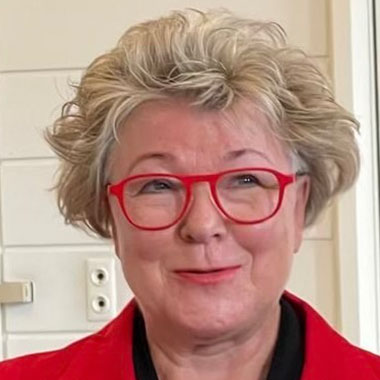
Dr. med. Cornelia Goesmann
Cornelia Goesmann is a specialist in general medicine/psychotherapy and former chairwoman of the Hanover district office of the Lower Saxony Medical Association.
“I support NTFN eV because I want to enable traumatized people seeking refuge and help in Hanover to receive comprehensive, professionally and humanely qualified medical and psychotherapeutic care.”

Prof. Dr. med.
Iris Tatjana Graef-Calliess
Iris Tatjana Graef-Calliess is the medical director of the Department of Psychiatry and Psychotherapy I at the University of Ulm. She heads the Working Group for Social and Transcultural Psychiatry and Psychotherapy at the Hannover Medical School (MHH) and is the deputy head of the Department of Intercultural Psychiatry and Psychotherapy of the German Society for Psychiatry, Psychotherapy, Psychosomatics and Neurology (dgppn).
“I support NTFN eV because ‘you have to take the world as it is, but you don’t have to leave it that way’ – Egon Bahr.”
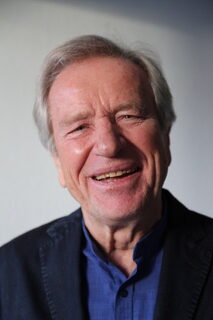
Prof. em. Dr. med.
Wielant Machleidt
Wielant Machleidt held the Chair of Social Psychiatry at Hannover Medical School from 1994 to 2007 and was Director of the Department of Social Psychiatry and Psychotherapy. He is the author of numerous books and scientific articles; one of his main areas of focus is intercultural psychotherapy.
“I support the NTFN because the right to asylum must remain an inalienable human right – especially for traumatized refugees!”
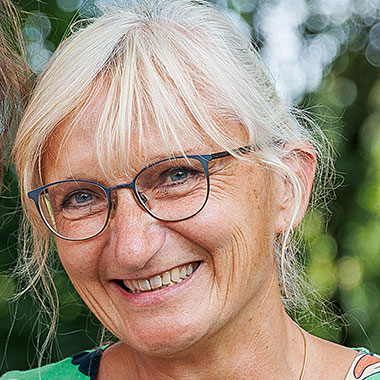
Hedwig Mehring
Social worker (Diplom-Sozialpädagogin), formerly a consultant in the Migration and Integration Department at the Caritas Association for the Diocese of Hildesheim eV
“I support NTFN eV because the psychological suffering of many refugees due to flight, displacement, torture, and possibly rape must be recognized early to prevent it from becoming chronic. Through NTFN eV, they receive expert help to regain trust and confidence. This service is essential and designed for sustainability.”
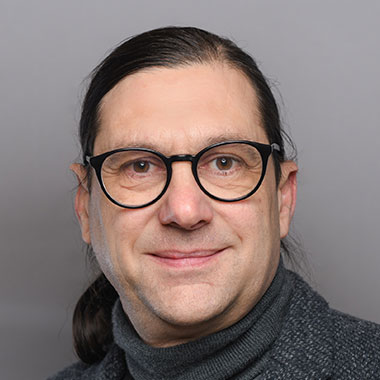
Thomas Müssel
Thomas Müßel works as a teacher in health and nursing education and is a former board member of Amnesty International Germany.
“I support NTFN eV because a society can only live together peacefully if people can trust each other. Traumatized refugees need our support to be able to trust again.”
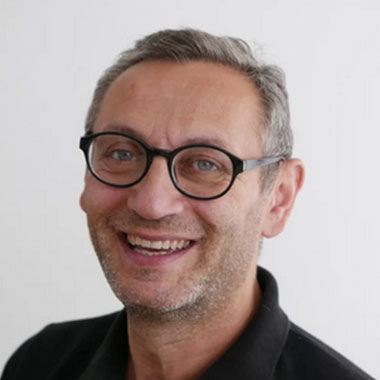
Dr. Ibrahim Özkan
Dr. Ibrahim Özkan holds a doctorate in political science and is a certified psychologist and psychological psychotherapist. He received his doctorate from the Faculty of Social Sciences at the University of Göttingen and is a certified psychotraumatologist (DeGPT), certified psycho-oncologist, certified EMDR/TRUST, trauma and EMDR supervisor (BAP/DPA), and co-founder of the DTPPP. He is responsible for occupational health management at the forensic psychiatric hospital in Lower Saxony.
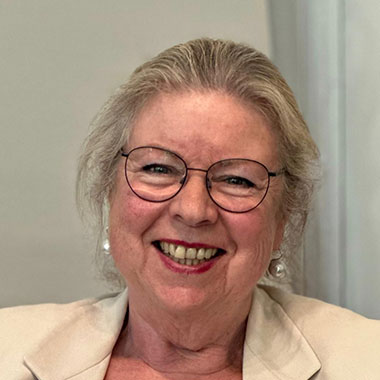
Dr. med. Cornelia Oestereich
Cornelia Oestereich is a specialist in psychiatry, neurology and psychotherapeutic medicine, a systemic training therapist (SG) and systemic training supervisor (SG)
"I support the NTFN because traumatized refugees suffering from post-traumatic stress disorder can find support and therapy here. This helps them to integrate their trauma into their life story and thus find their way back to themselves."

Newsletter & event mailing list
Would you like to stay informed about current projects and news from NTFN eV? Our NTFN newsletter (4-5 times a year) will keep you up to date.
Would you like to receive information about our events, training courses, and continuing education programs? We would be happy to add you to our mailing list . Simply send an informal email to fortbildungen@ntfn.de.

Annual reports
We report on the work of NTFN eV in our annually published annual reports.
You can view our current 2025 annual report here:

The annual reports from previous years can be found in the download area.
Projects of the association
Place of mourning in Hanover
People fleeing war and persecution not only lose their homes. They lose their former lives and very often loved ones as well.
The experience of fleeing is inextricably linked to grief. For various reasons, however, refugees are not always able to say goodbye to loved ones or visit their graves – assuming such a place even exists. People who die on the increasingly dangerous routes to Europe often have no grave. The same is true for those who disappear without a trace, are abducted, or are killed in their countries of origin.
Therefore, it is absolutely essential that spaces or places be created where refugees can come to terms with their loss and their grief.
What is important to us: Our place of mourning and remembrance should be oriented both "inwardly" and "outwardly." That is, it should serve both the necessary grieving process for individuals and be understood as a cautionary appeal to civil society.
We want to establish such a memorial site in Hanover. We are currently in discussions with various political representatives and the city administration regarding this.
You can find more information about our project in the brochure about the place of mourning.
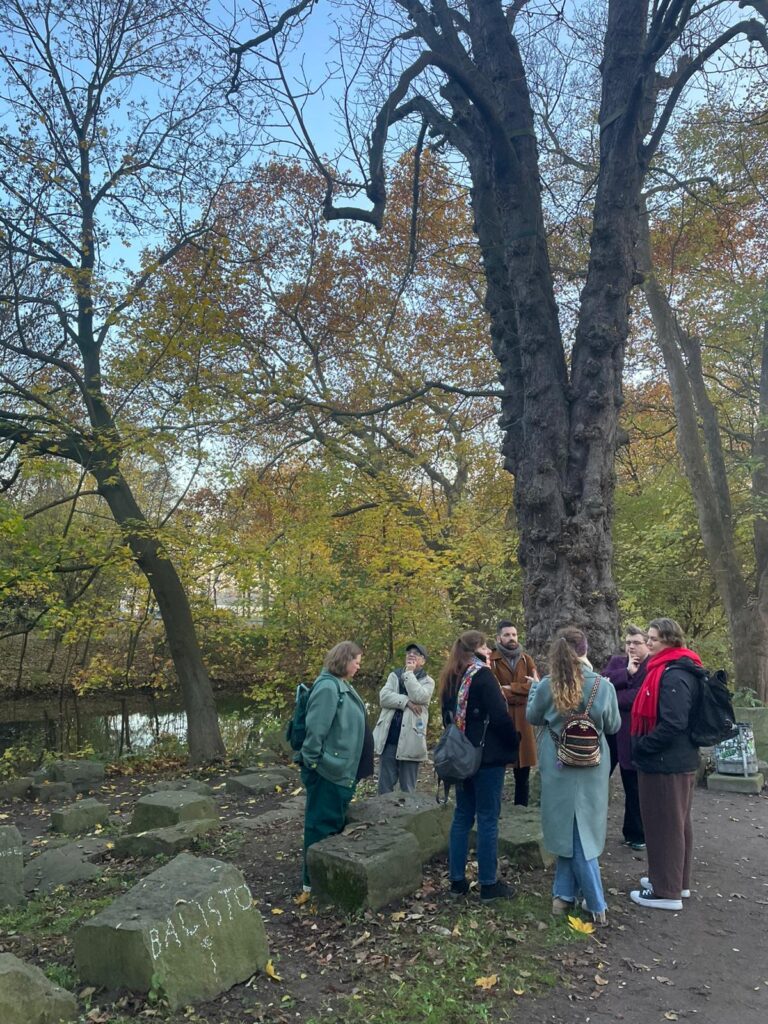
Possible location for a memorial site near Lake Maschsee
Advice and support for foreign refugees
The war in Ukraine, in particular, has led to an increase in the number of refugee children and young people in Lower Saxony in recent years. Thanks to federal funding, we have been able to expand our work with refugee children and young people in recent years.
Funded by: BMBFSFJ (Federal Ministry of Education, Science and Research)


from our pediatric therapy services